Finding Your Comfort Zone: Why Massage Pressure Matters
Walking into a quiet treatment room should feel like a relief, not a test of endurance. Many people book a session hoping to melt away stubborn stiffness, yet they spend the entire hour gritting their teeth because the touch is either painfully intense or barely noticeable. Understanding your preferred massage pressure Vienna VA is the secret to getting a treatment that actually works for your body. Pressure is never a one-size-fits-all metric. It changes based on your stress levels, muscle fatigue, sleep quality, and personal sensitivity on any given afternoon.
When you book a session at a dedicated local sanctuary like Moon Lake Spa, located at 503 Maple Ave W in Vienna, Virginia, you are entering a space focused entirely on your individual comfort. Whether you are driving in from right around the corner in Vienna, or commuting from nearby Tysons Corner or Fairfax, your session should match your physical limits. You never need to endure pain just to get good results. In fact, true therapeutic relaxation happens only when your nervous system feels completely safe and supported.
Decoding the Spectrum: Light, Medium, and Firm Pressure
Massage pressure generally falls into three main bands: light, medium, and firm. Knowing what each level actually entails makes it much simpler to ask for what you need before the session begins.
Light Pressure: Calming the Nervous System
Light pressure involves delicate, sweeping strokes across the superficial layers of tissue. It is not designed to dig into knots. Instead, it stimulates the parasympathetic nervous system, lowers heart rate, and encourages gentle circulation. Techniques such as lymphatic drainage operate in this gentle realm, using rhythmic skin-stretching motions to support fluid movement without taxing the muscles. If you are recovering from intense fatigue, manage chronic sensitivity, or simply want to switch off mental chatter, light pressure is an exceptional choice.
Medium Pressure: The Classic Swedish Balance
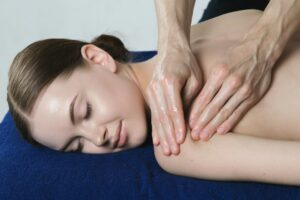
Medium pressure provides enough weight to feel grounding and soothing without causing discomfort. This is the hallmark of traditional Swedish massage. Your therapist uses gliding strokes, kneading, and circular frictions to warm up muscle fibres and ease everyday tension. For most first-time visitors, medium pressure strikes the ideal balance. It feels substantial enough to loosen tight shoulders after long hours at a desk, but gentle enough that you can drift off to sleep. You can read more about classic table comfort in our guide to Swedish vs. deep tissue therapy.
Firm and Deep Pressure: Targeting Structural Tension
Firm pressure goes deeper into the muscle layers and connective fascia. It uses slower strokes and focused friction with palms, forearms, or thumbs. The goal is to address chronic holding patterns, postural strain, and stubborn adhesions. However, firm pressure must always be applied gradually. A skilled therapist warms the superficial layers first before leaning into deeper tissue. If a therapist jumps straight into heavy force, your muscles will naturally tighten up to defend themselves, defeating the entire purpose of the treatment.
To experience how tailored pressure can transform your afternoon, you can choose a real Moon Lake Spa massage appointment through our direct booking link.
| Pressure Level | Ideal For | Common Modalities | Sensation Felt |
|---|---|---|---|
| Light | Stress relief, sensitive skin, recovery | Lymphatic work, gentle relaxation | Soft, soothing, featherlight touch |
| Medium | Everyday tension, general relaxation | Classic Swedish massage | Grounding, comforting, easy release |
| Firm / Deep | Chronic tightness, postural stiffness | Deep tissue, focused therapeutic | Focused, intense, slow release |
The “No Pain, No Gain” Myth: Why Deeper Is Not Always Better
One of the biggest misconceptions in bodywork is that a session must hurt to be effective. We have all heard people boast about surviving an excruciating deep tissue session, nursing bruises for days afterwards. Science and clinical experience tell a very different story.
When pressure crosses the line from therapeutic challenge into genuine pain, your body responds with a fight-or-flight reaction. Your brain sends signals to contract the surrounding muscles to guard the area against injury. Your breathing becomes shallow, your heart rate climbs, and your nervous system floods with stress hormones. Instead of unwinding, your muscle fibres become more rigid.
Research reviewed by institutions like the National Center for Complementary and Integrative Health (NCCIH) notes that while massage can offer short-term comfort for back, neck, and shoulder tension, vigorous or overly aggressive pressure carries real risks. Forceful manipulation can lead to excessive inflammation, bruising, or aggravated nerve pathways. Long-lasting pain or dark bruises are not badges of honour; they are signs that tissue was overworked.
A productive massage should elicit what therapists often call “good hurt”: a subtle, relieving ache where you feel a tight spot opening up, accompanied by an instinctive impulse to take a deep, relaxed breath. If your toes curl, your jaw clenches, or you have to hold your breath, the pressure is simply too heavy.
How to Communicate Before the Session Begins
Clear communication starts the moment you fill out your intake form and sit down with your therapist. Never assume the practitioner automatically knows how your body feels today.
- Name your focus areas and your “no-go” zones: Tell your therapist where you carry strain (such as between the shoulder blades or in the lower back) and where you feel sensitive.
- Mention your recent activity: Did you run a half-marathon over the weekend, or have you been hunched over a laptop in an office near Tysons Corner all week? Context guides the therapist’s approach.
- Disclose medical background: If you have health conditions, recent injuries, or are expecting, share this immediately. For instance, expecting mothers need carefully adjusted positioning and moderate force, which we explain in detail in our first prenatal massage guide.
- State your baseline preference: Say clearly: “I prefer medium pressure overall, but please go lighter on my neck and a bit firmer across my glutes.”
Setting these boundaries upfront gives your therapist a clear map to follow, removing guesswork from the treatment.
Speaking Up During Treatment: You Are Always in Control
What happens when the table heats up, the lights dim, and the pressure starts feeling like too much? Many clients stay silent because they worry about offending the therapist. Please know this: professional therapists rely on your feedback to do their jobs well. They cannot feel what you feel.
You have full authority over your session. You may ask for reduced pressure, request a change in technique, or stop the session entirely at any point. A professional therapist will always respect your request immediately and without hesitation.
Here are simple, polite phrases you can use on the table without feeling awkward:
- “Could we lighten the pressure just a bit on this side?”
- “That spot feels a little tender today; let’s back off there.”
- “Could you hold that spot with steady, medium pressure for a second?”
- “I would love a little more weight through the upper shoulders if possible.”
- “Let’s take a pause here, please.”
Good therapists will frequently check in during the first ten minutes with a simple question: “How is this pressure for you?” Answer honestly. Do not say “It’s fine” if you are silently wishing for lighter hands. A quick calibration early on ensures the rest of your session is deeply restorative.
If you are planning to share a relaxing wellness day with a partner, friend, or relative, you can plan a couples massage and check availability at Moon Lake Spa so both of you can customise your individual pressure side by side.
Matching the Right Modality to Your Goals
Choosing the right style on the spa menu prevents pressure mismatches before you even step through the door. At Moon Lake Spa in Vienna, treatments are designed around distinct physiological goals.
Swedish Relaxation Massage
This is the gold standard for full-body restoration. Using long, fluid strokes (effleurage), gentle kneading (petrissage), and mild friction, it improves surface circulation and melts general daily tension. It is the best choice if you are feeling run-down, overwhelmed, or new to professional bodywork.
Deep Tissue Massage
If you suffer from deep-seated muscular stiffness or restricted mobility from repetitive movement, deep tissue is the answer. It uses slow, intentional compression to access sub-surface muscle layers. When performed properly, it should feel deliberate and focused, never hasty or sharp. For an in-depth breakdown of what this entails, explore our article on deep tissue massage in Vienna VA.
Prenatal Massage
Designed specifically for the physical shifts of pregnancy, this modality uses supportive side-lying bolsters and careful, gentle-to-medium strokes. Deep, forceful work is deliberately avoided to ensure maternal safety and circulatory comfort. If you want a safe, soothing session during pregnancy, you can explore prenatal massage and booking options with our experienced staff.
Post-Massage Care: What Normal Recovery Feels Like
Once your session ends, your muscles need time to integrate the work. Understanding what is normal helps you manage post-treatment sensations responsibly.
What is Normal:
- A pleasant, mild muscular tenderness similar to the day after an easy workout.
- A feeling of lightness or loose limbs.
- Thirst and mild drowsiness as your body settles into rest mode.
What is Not Normal:
- Sharp, shooting nerve pain.
- Deep, dark purple bruising.
- Significant soreness that prevents you from going about your daily routine for several days.
Drink plenty of water following your massage to support metabolic waste clearance. A warm bath at home can help prolong muscle softness. If you ever experience lingering or unusual pain, or if you are dealing with persistent chronic issues, always consult a primary healthcare provider. Massage therapy is a supportive, holistic wellness practice, not a replacement for formal medical diagnoses or orthopaedic medical interventions.
Finding the perfect balance of pressure is an ongoing dialogue between you and your therapist. By voicing your comfort levels clearly and honouring your body’s signals, you ensure every visit leaves you restored, balanced, and refreshed.
Whenever you are ready to experience attentive, personalised care right here in Northern Virginia, book your massage directly with Moon Lake Spa and discover bodywork tailored entirely to your comfort.